


In 2023, DoorDash deactivated a delivery worker named Rosendo Tacam and never paid him for his last week of work. “I felt angry and disrespected,” he said later. DoorDash brought in $13.7 billion last year. Tacam couldn’t afford a lawyer.
So he filed a complaint with his city.
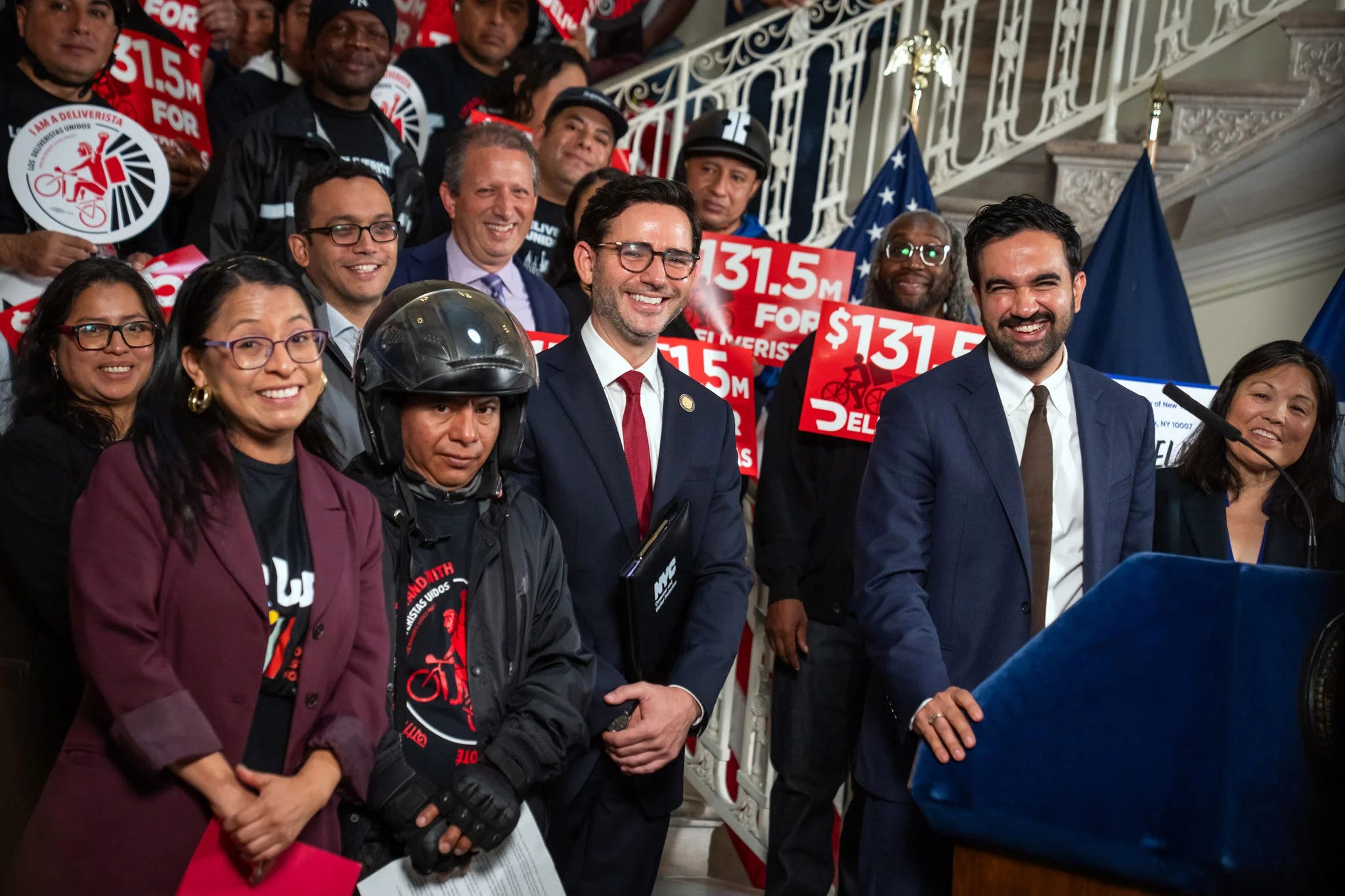
On Tuesday, Tacam stood at City Hall as Mayor Zohran Mamdani announced the settlement. DoorDash will pay $131.5 million to resolve the city’s investigation. More than $115 million of it goes to over 260,000 delivery workers who were underpaid, paid late, or never paid at all between April 2022 and June 2026. The city calls it the largest worker settlement in its history.
It started with a law
In 2021, the City Council passed a law guaranteeing app-based delivery workers a minimum pay rate. Workers Justice Project and Los Deliveristas Unidos organized for it. Former Comptroller Brad Lander, who helped pass it, said everyone knew it would take “diligent, creative, aggressive enforcement.”
The apps fought back. The city’s Department of Consumer and Worker Protection issued the pay rule in June 2023 and began enforcing it that December, after lawsuits. Minimum pay now stands at $22.13 an hour before tips.
Then workers used it
The complaints came early. In August 2023, THE CITY reported that 13 DoorDash workers had filed claims over roughly $22,000 in unpaid wages. That same year, Workers Justice Project brought the city evidence that 200 DoorDash workers had wages stolen going back to 2022. In November 2024, deliveristas filed 95 more cases.
By spring 2025, DCWP had logged more than 300 complaints against DoorDash, and a DCWP spokesperson told Documented the agency was still investigating the company for widespread violations.
That was under Mayor Eric Adams, whose consumer protection agency kept this case alive.
Giving enforcement some oomph
Mamdani took office in January, and his DCWP commissioner, Sam Levine, inherited the case. Levine said on Tuesday that the investigation began under the previous administration, and that new enforcement resources let the agency accelerate it.
DCWP launched a Research and Analytics Division built to dig through corporate data. Investigators pulled terabytes of DoorDash’s own records and worked through 152 million payments and 110 million hours of work. The agency found that DoorDash had left whole categories of work time out of its minimum pay math, including canceled trips and time workers spent waiting between deliveries. The city hasn’t said when the investigation expanded to cover those violations.
Workers who were never paid will get three times what they were owed. Workers paid late get double. Nobody has to file a claim. The city already knows who’s owed and will start emailing workers in late October.
DoorDash: We screwed up
DoorDash’s statement on the settlement opens with “Simply put, we screwed up.” The company admits about $12.3 million in missing and late payments and blames software bugs and complicated deliveries.
It disputes the rest. More than $83 million of the settlement comes from a disagreement over how to pay workers for on-call time between deliveries. DoorDash maintains its method was legal, and it agreed to use the city’s method going forward to avoid years of litigation. No judge ruled on the question. The case ended in a consent order, with DoorDash agreeing to settle without a hearing.
Payouts will vary widely. DoorDash puts the median payment at about $48. Levine says some workers are owed more than $10,000.
Built to last
The most important part of this settlement may be what happens after the checks go out. For three years, DoorDash must send DCWP detailed pay data every month. It has to change its software so no New York delivery can be offered unless the worker’s time is being counted. An internal compliance monitor has to certify each year, under oath, that the company is following the law.
Workers get their own tool, too. Workers Justice Project and Princeton’s Workers’ Algorithm Observatory are building software that lets deliveristas share their trip and pay data directly with the city. The people doing the work become the watchdogs.
That’s the job!
Look at the chain. Workers organized for a law. The Council passed it. The city defended it in court. Workers filed complaints. Investigators opened a case under one mayor, and the next mayor funded them to finish it.
That’s what government is for. One delivery worker can’t take on a company that brings in $13.7 billion a year. A city can. Staff it, fund it, point it at the people doing the cheating, and the little guy wins.
Rosendo Tacam filed his complaint in 2023.
Three years later, 260,000 people are getting paid.
Slade Wentworth | The Dad Briefs covers the civic, political, and quietly human stories that shape family life in America, with recipes along the way.
All little guys need unions!!!
We're getting some of the uber/lyft guys organized here in Boston. Should apply to these hard working folks, too!