


Full recipe below.
This is part of a series profiling candidates who I believe deserve your attention, because the fight against authoritarianism in America doesn’t end at the White House. It runs through Congress — both chambers. And if we’re serious about winning that fight, we have to be serious about who we’re sending there.
There’s a moment that tells you almost everything you need to know about Mary Peltola.
In 1996, she was twenty-two years old and running for a state house seat in the Bethel region of Alaska. She lost — by fifty-six votes — to an incumbent named Ivan Ivan. She went back to work. Not back to campaign strategy sessions or donor calls. Back to the Kuskokwim River, to the work of feeding communities and fighting for salmon runs, and getting her community to speak with one voice to the federal government about the resources that kept them alive.
She’d run again. And again. And eventually, she won.
That’s the shape of her political life. Earned steadily over time.
Who Mary Is
Mary Sattler Peltola was born in Anchorage on August 31, 1973, the same calendar date on which she would later learn, 49 years later, that she had won the congressional special election to represent Alaska in the U.S. House. Turning 49 as the congresswoman-elect of the 49th state.
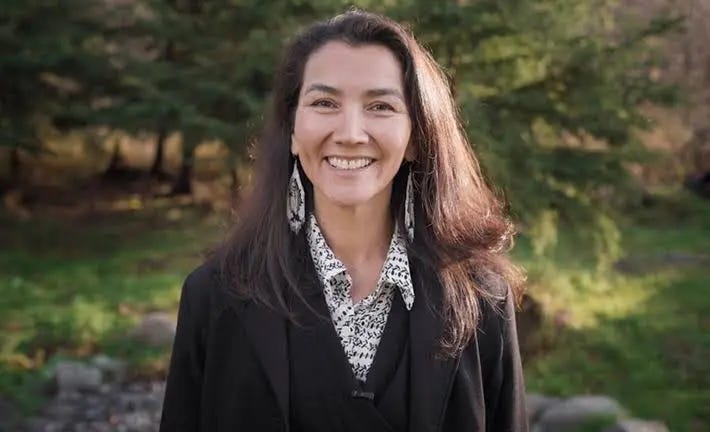
She is Yup’ik Alaska Native on her mother’s side. Her Yup’ik name is Akalleq — it means “the one who rolled.” Her mother, Elizabeth “LizAnn” Piicigaq Williams, is from Kwethluk, a village on the Yukon-Kuskokwim Delta. Her father, Ward Sattler, was a Nebraska-born man who moved north to teach school, became a bush pilot, and along the way made friends with Alaska’s longtime Republican congressman, Don Young. As a child, Mary traveled to Young’s campaign events with her father. Decades later, she would win his seat.
She grew up across a handful of small Yup’ik communities: Kwethluk, Tuntutuliak, Platinum, and Bethel. Villages measured in hundreds, not thousands. Places where the power goes out. Places where subsistence fishing isn’t a lifestyle, but rather an alignment between a community and its survival.
She is Orthodox Christian, a faith that arrived in Yup’ik communities through 18th-century Russian contact and has remained woven into village life ever since. She speaks English, Yup’ik, and some Russian — a layered inheritance that she carries without making a production of it. She serves on the board of Russian Orthodox Sacred Sites in Alaska. She is a mother of seven: four biological children and three stepchildren.
She started fishing at six. Her father registered a boat in her name when she was twelve. By fourteen, she was captaining that boat on the Kuskokwim.
She describes the river as “the center of my universe.” She can point from a moving skiff to the bank where her great-grandparents lived, and across the water to where her mother was born during berry-picking season.
Through Ups and Downs
Before she made national news, Peltola built something quieter.
After that 56-vote loss in 1996, she ran again and won a seat in the Alaska state legislature, where she served for a decade — becoming the first Alaska Native woman to chair the House Finance Committee. She worked across the aisle constantly, in a body where Republicans held the majority. She left the legislature in 2009 and spent years working in tribal resource management, eventually becoming Executive Director of the Kuskokwim River Inter-Tribal Fish Commission. The job was to coordinate 118 sovereign tribal governments around a shared resource crisis: the collapsing salmon runs that fed their communities.
You don’t do that job by being ideologically rigid. You do it by understanding that the people on both sides of the table want the same thing — fish in the river, food on the table, a future that looks like the past — and that your job is to make the political system serve that shared interest, not the other way around.
That experience is the key to understanding everything that came next.
In June 2022, longtime Republican congressman Don Young died in office. Alaska held a special election. Peltola entered the race. She won and became the first Democrat to hold Alaska’s single congressional seat in nearly fifty years, and the first Alaska Native ever elected to Congress. She beat Sarah Palin. Twice. (They are, by all accounts, genuinely friendly. They’ve been photographed on a trampoline together. Alaska contains multitudes.)
She won in a Republican state because she ran on something that cuts across party lines: that your representative should be working for you. That food security is a dignity issue. That the people who fish and farm and hunt and teach should have a seat at the table where decisions get made.
She lost her re-election bid in November 2024 by fewer than 7,000 votes in one of the most Republican states in the country, in a national environment that swung hard against Democrats.
Forty-seven days later, she announced she was running for the U.S. Senate.
In July 2023, Peltola’s husband, Eugene “Buzzy” Peltola Jr., died in a small-plane crash in the Yukon-Kuskokwim Delta — the same terrain she grew up on, where small planes are the highway system and crashes are not rare. She was serving in Congress at the time.
I don’t want to make too much of private grief in a public profile. But it matters that when Peltola describes why she does this work, she talks about the river, about her kids, about communities that have survived by deciding to survive. She has personal experience with the cost of continuing on. She keeps going anyway.
So, Why the Senate, and Why Now?
Alaska has two Senate seats. Both are currently held by Republicans: Lisa Murkowski and Dan Sullivan. Sullivan’s seat is on the ballot in 2026. Peltola is running for it.
The conventional framing is: this is a long shot. Alaska is a red state. Democrats don’t win statewide there.
Except: Peltola already has won statewide there. She held a congressional seat covering the entire state for two years. She came within 7,000 votes of holding it again in a brutal environment for her party. She has crossover appeal with rural Republicans, Alaska Native voters, and independents that no other Democrat in the state can match. She is, arguably, the only Democrat in America who could win a Senate seat in Alaska.
And Alaska matters.
Control of the Senate is the hinge of everything right now. If Democrats can flip it — and flipping Alaska is one path to doing that — the ability to confirm judges, pass legislation, hold investigations, and function as a meaningful check on executive power comes back into play.
This Matters Beyond Alaska
We are in a moment where the structures of democratic governance are being tested in ways that require a serious, sustained response. The response doesn’t happen through protest alone, or through outrage, or through waiting for the courts to save us. It happens through elections. It happens through Congress. It happens through electing people who understand that their job is to represent their constituents and not to serve as a rubber stamp for whoever holds the executive.
Peltola is one of those people. Her entire biography is an argument against the idea that you have to choose between your community and your country — between local knowledge and national responsibility.
She knows what the Kuskokwim looks like in every season. She knows what it means when the salmon don’t come back. She lost her first race by 56 votes and went back to work. She lost her husband while she was in office and kept going. She lost her House seat and announced a Senate run seven weeks later.
Mary is real, seasoned, and shaped by something greater than ambition.
The fight for democratic governance in America runs through Congress. And it runs, maybe surprisingly, through Alaska.
Pay attention to this race.
Follow Mary’s Campaign
Mary Peltola for U.S. Senate: marypeltola.com Donate: marypeltola.com/donate Instagram & Threads: @marypeltola | Bluesky: @marypeltola | Facebook: @marypeltolaAK | TikTok: @mary_peltola | X: @MaryPeltola | Substack: Mary Peltola
Sources: Wikipedia; Britannica; NPR / Alaska Public Media; KYUK Bethel; Anchorage Daily News; GovTrack; Congress.gov; Ballotpedia; NTSB final report on the crash of Eugene Peltola Jr. (July 2023); Hopium Chronicles (Simon Rosenberg interview, March 2026).
And now, in the Kitchen Counter Civics tradition — a recipe worth making while you think about all of this.
Honey Soy Scallion Baked Salmon
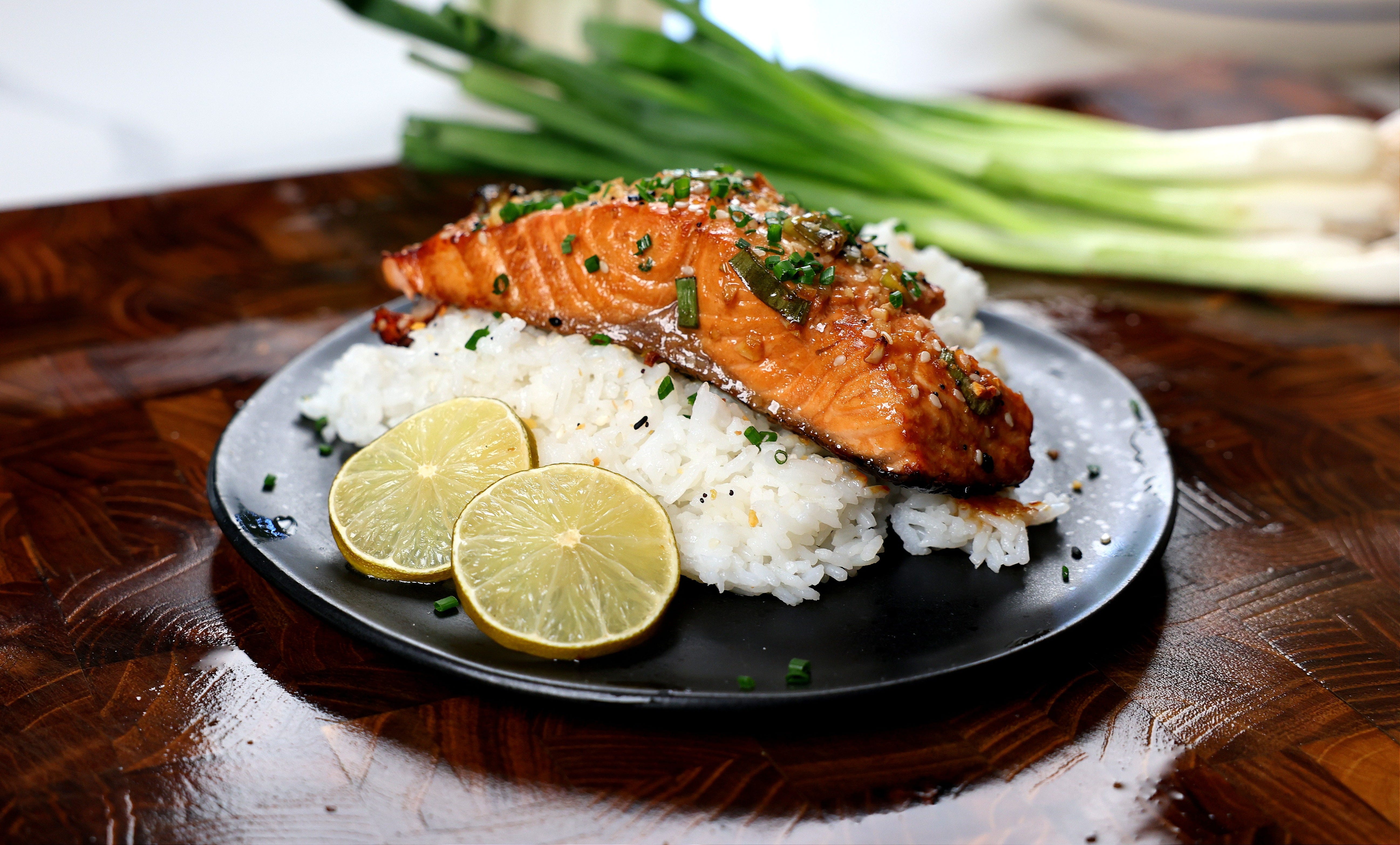
Prep time: 10 minutes (plus marinating) | Cook time: 10–12 minutes | Serves: 2 | Calories: ~237 per serving
Ingredients
2 serving pieces of salmon
¼ cup finely chopped scallions
⅓ cup soy sauce or tamari
2 tablespoons rice vinegar
½ to 1 tablespoon honey
1 clove garlic, minced
½ teaspoon grated ginger
2 tablespoons neutral oil (or more sesame oil)
1 tablespoon toasted sesame oil
4 thin slices of lime
Optional toppings:
½ teaspoon black or tri-color sesame seeds, or everything-but-the-bagel seasoning
Instructions
Combine scallions and all ingredients except the lime slices in a large bowl. Mix well. Add the salmon and make sure it’s fully coated. Marinate for at least 10 minutes, or up to 12 hours in the refrigerator.
Preheat your oven to 400°F. Line a sheet pan with parchment. Add the salmon, spoon some of the remaining marinade over the top, and discard the rest. Sprinkle with sesame seeds or EBTB seasoning if you like and lay the lime slices on top of the filets. Bake for 10 to 12 minutes. (If you’re using farmed salmon, add a few extra minutes.)
Serve over white jasmine rice and/or seasonal roasted vegetables. Enjoy!
The Dad Briefs covers the civic, political, and quietly human stories that shape family life in America — with recipes along the way. Food, Fun and Fatherly Wisdom. Recipes for Resistance.
👏🏼👏🏼👏🏼❤️❤️💋
Somewhere and someone that matters and is worth the attention money time and effort to make this happen!!! 👏👏👏👏👏👏👏☮️