



Toward the end of a panel discussion I was moderating for the Civil Rights Cold Case Records Review Board last year, a woman named Wanda Charles spoke about her uncle.
Chrispon Herbert Charles Jr. was 21 when he was shot and killed by New Orleans police officers in the back of a patrol car on July 4, 1949.
“My mother told us the story,” Wanda said. “My grandparents never talked about it. My great-grandparents never talked about it. But my mother kept him alive by telling us what happened to him.”
Among those who witnessed Chrispon’s killing was his own father, Wanda’s grandfather. It was he who initially called the police that day.
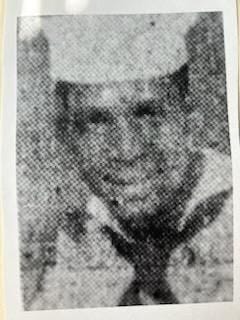
His account of the shooting differed substantially from those of the officers, as did the accounts of several other eyewitnesses. Two grand juries declined to indict. The federal investigation was closed in January 1950. In 1951, Chrispon’s father sued the two officers. We don’t know the outcome of that lawsuit.
But more than three-quarters of a century later, Chrispon’s story survives in the federal records.
As spokesman for the Civil Rights Cold Case Records Review Board, I spend much of my time communicating our work in numbers: how many cases the Board has reviewed, how many thousands of pages of federal records it’s authorized for release, how many pages remain withheld from the public.
What Wanda spoke about that day was something considerably harder to quantify.
In a television interview in June 2025, Wanda described how having access to records about her uncle had changed her experience of telling his story. Where once she had felt despair, she now spoke of hope. She had something tangible that she could examine herself and share with her family.
For decades, families like Wanda’s have been the custodians of a history that much of the country knows little or nothing about. They have passed down stories at kitchen tables and family reunions. They have preserved photographs and newspaper clippings. And as each generation has passed away, the responsibility of keeping those memories alive has fallen to the next.
There is a particular significance, I believe, to seeing the name of your loved one on a United States government website. To seeing their photograph there. To knowing that anyone, anywhere in the world, can now learn who they were, what happened to them and what efforts were made to secure justice on their behalf.
Their history is no longer something that their families alone must work to preserve. Through the work of the Civil Rights Cold Case Records Review Board, it is now a permanent part of the public record of our nation’s history.
There are, of course, limits to what the release of government records can accomplish. Documents cannot restore a life. They cannot undo the injustices of the past. They do not necessarily answer every question a family has about the death of a loved one.
And the records themselves can be extraordinarily painful to read.
Every family comes to these records with its own history. Even within a family, the experience of learning new details about a loved one’s death can be profoundly different from one person to the next. The emotions these records evoke are as individual as the people reading them.
What Wanda shared with us at the panel discussion was her own experience.
“I greet you with hope,” she told us. “Hope for a brighter future and the work that you all are doing. And I greet you with joy, knowing that my ancestors are still here with me and guiding me. I greet you with an inner peace that I did not have at one time, although I am still sad.”
She went on to speak about the people capable of committing the kinds of crimes that took his life.
“Because I realize now that the people who commit these types of crimes — whether they’re operating in fear or hatred, or both — I just think about them now even more. And I recognize that they had to be in some incredible pain themselves to commit these crimes. Yet we still see it happening today. So I think about the spirit of people and what they carry with them and I greet you in love.”
For generations, the responsibility of preserving Chrispon’s memory fell largely to his family. Now his story has a permanent place in the public record of American history.
Steve Fennessy is the communications manager for the Civil Rights Cold Case Records Review Board.
The Board’s work faces a January deadline
Under existing law, the Board’s mandate expires Jan. 8, 2027. Bipartisan legislation extending the Board’s mandate by four years has passed the Senate and remains pending in the House.
Without an extension, the Board will cease operations with hundreds of civil rights cold cases still awaiting review.
Call your representative at 202-224-3121. Ask them to push leadership to pass H.R. 3087 to the floor before Congress goes home.
Explore the records
Visit the Board’s website to read about Chrispon Charles’ life, his death, and his father’s efforts to seek justice. You can access the federal records in his case and the documents in each case the Board has released through the Civil Rights Cold Case Records portal.


