


In March 2023, Alice Huang, a businesswoman from Hunan Province, took control of a small Singapore company and renamed it Megaspeed. She is no relation to Jensen Huang. Megaspeed went into the data center business months after the U.S. tightened its export controls on advanced AI chips, and it soon became an official Nvidia cloud partner.
That June, a Shanghai company called Century Litong was founded under a holding company tied to her family. By October, it, too, was an Nvidia cloud partner.
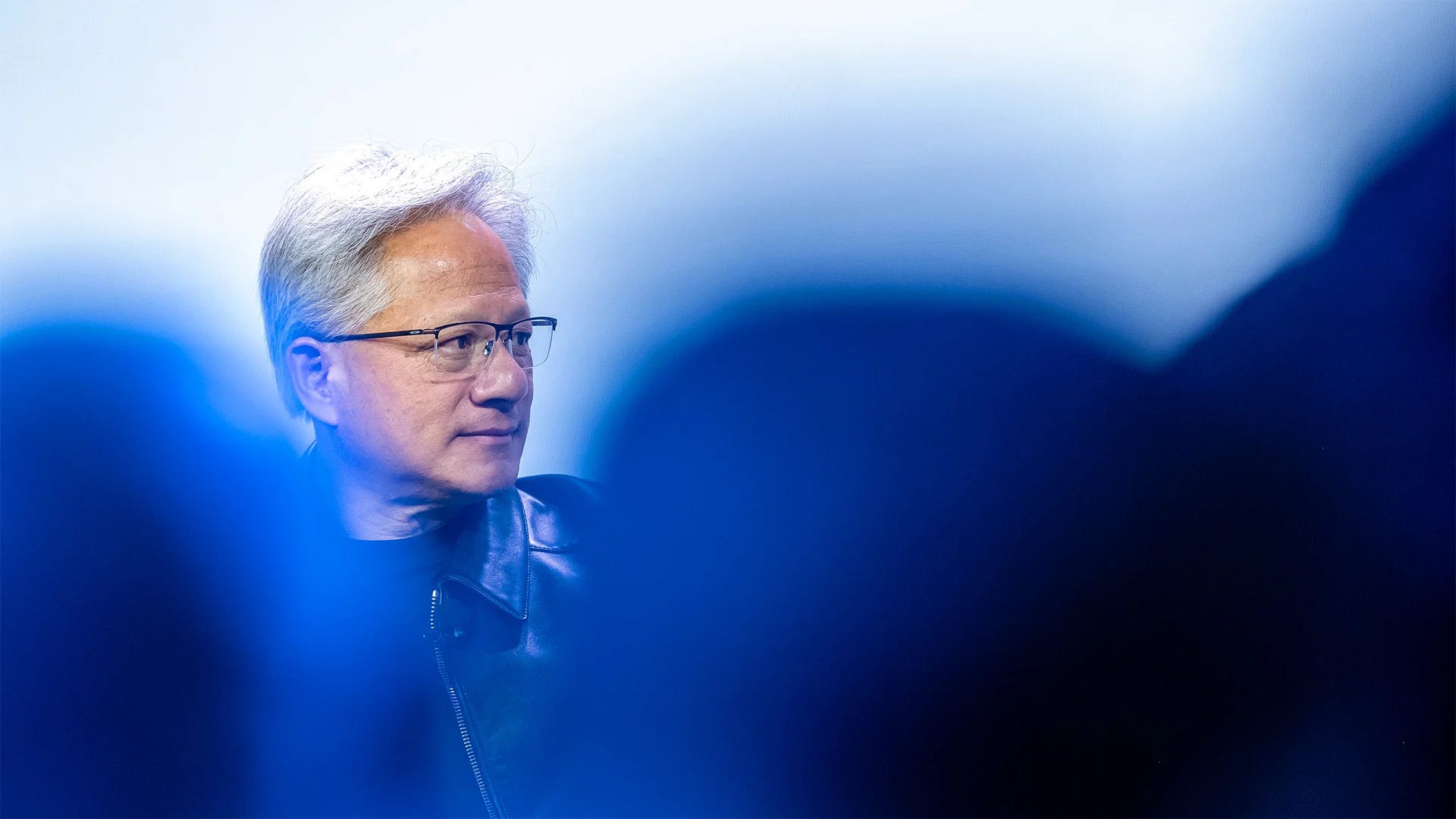
In 2024, the Financial Times reports, Megaspeed’s balance sheet grew from $33 million to $3 billion. That same year, a Commerce Department official toured its data center in Malaysia and found Nvidia equipment still in the boxes, according to the TechCrunch timeline. Officials worried it was headed somewhere else.
In May 2025, she and Nvidia’s CEO were filmed at a dinner in Taipei. In June, Singapore questioned her over suspected customs violations and held her passport for eight months. Police released her with a “stern warning” for lack of evidence. She left for Shanghai and was later barred from returning to Singapore for giving police inaccurate information.
In October 2025, the U.S. and Singapore both confirmed they were investigating Megaspeed over possible export violations. Nvidia said it had no reason to believe its chips had been diverted. Two months later, President Trump let Nvidia sell its advanced H200 chips to China in exchange for a cut of the sales.
This spring, a memo circulated among top U.S. officials identifying Alice Huang as a spy for China’s Ministry of State Security. On October 29, The New York Times reported her close relationship with Jensen Huang. On November 8, he admitted an affair in a letter to employees. Two more affairs surfaced in the following days. On November 12, the board accepted his resignation.
Five days later, Nvidia announced record quarterly revenue of $115.8 billion. Interim CEO Colette Kress also said Nvidia would stop selling H200 chips in China.
The affair got the headlines. The paper trail is the story.
Know your customer
I spent years in financial technology and fraud prevention. Every bank in America runs a program called Know Your Customer. Before you move serious money for someone, you find out who they are, who really owns the account, and whether their activity makes sense.
Run Megaspeed through that checklist.
Ownership that moved on paper. In late 2023, Alice Huang’s shares went to SwiftData, a Singapore company with one storefront office and a handful of listed employees. The phone number on its website reportedly rang at a private home. The WSJ reports she was still introducing herself as Megaspeed’s CEO in August 2025.
Growth with no explanation. A balance sheet that multiplies ninety times in a year.
Inventory that never got used. Servers sitting in boxes in Malaysia.
A known destination. Alibaba, the Chinese cloud giant, was Megaspeed’s biggest client and lent money to its Malaysian arm.
Any one of those at a bank triggers a review. All four together get a Suspicious Activity Report filed, and the account closed. The Information reports that companies tied to Alice Huang helped move about 240,000 banned Nvidia chips into China, worth at least $7.5 billion.
There is one more detail. Bloomberg reports that Nvidia’s general counsel, Tim Teter, intervened in the federal probe of Megaspeed and asked a Commerce official whether the administration had played a role in Alice Huang’s detention.
What we don’t know
The spy question is unsettled. Rep. Jim Himes said after a classified briefing that he doubts she is one. Attorney General Todd Blanche said the Justice Department has reached no conclusions. China calls the allegations a fabrication. Nvidia says Jensen Huang’s relationship with her was business only.
The chip question doesn’t depend on any of that. Whether or not she worked for Beijing, the world’s most valuable chipmaker kept selling to a buyer with every warning sign a bank compliance officer is trained to catch. An administration briefed on the relationship opened chip sales to China anyway.
Why it matters at the kitchen table
These chips are what AI runs on. Our government restricts their sale because whoever has the most of them shapes the next generation of everything from medicine to missiles. If you own an S&P 500 index fund in a 401(k), you own a piece of Nvidia too.
The Justice Department now runs the Megaspeed investigation. California’s attorney general served Nvidia with a subpoena on November 19, asking whether chips or secrets reached China and whether investors were misled, Forbes reports. Jensen Huang testifies before three House committees on December 1. Tim Teter follows on December 2.
Those sessions are closed. Chairman Brian Mast says they will be recorded and transcribed.
The ask: Call your House member this week. Ask them to support releasing the December 1 and 2 transcripts to the public. A national security breach of this size shouldn’t be settled behind closed doors.
The Bookshelf
Chip War: The Fight for the World’s Most Critical Technology by Chris Miller
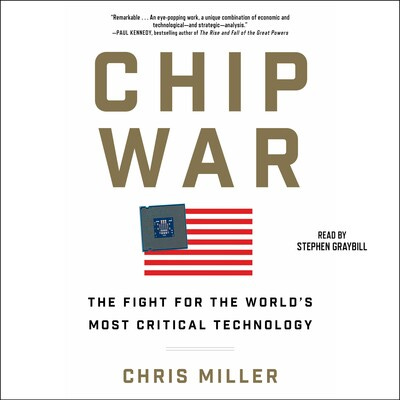
If this week’s story left you wondering why a box of computer chips in a Malaysian warehouse is a national security matter, start here. Miller is an economic historian at Tufts, and he tells the story of the microchip from the Cold War to the current fight between the U.S. and China. Along the way you learn why a handful of companies in California, Taiwan and the Netherlands hold so much power, and why Washington keeps writing rules about who can buy their products.
It reads like a thriller and won the 2022 Financial Times Business Book of the Year. A 2025 updated edition adds a new afterword. After this month, the chapters on export controls read like a prequel.
The Recipe
80/20 Hainanese Chicken and Rice (One-Pot Version)
Credit to Douglas Chau for this recipe, which won him a one-pot challenge award on the Food Network. Hainanese chicken rice is Singapore's closest thing to a national dish. The traditional version poaches a whole bird and takes most of an afternoon. This one gets you 80 percent of the flavor for 20 percent of the work, in one pot. Everything you put in is on the ingredient list. Megaspeed could learn something.
Serves 2.
Chicken
2 chicken thighs (450 g)
2 tsp sesame oil (5 g)
¼ tsp salt (1.5 g)
Rice
1 cup jasmine rice (200 g)
6 cloves garlic (15 g)
½ inch ginger (15 g)
3 green onions (45 g)
1¼ cups chicken broth (300 g)
1 tsp chicken bouillon powder (5 g)
½ tsp turmeric (1 g)
Ginger scallion sauce
½ inch ginger (15 g)
1 green onion (15 g)
1 tsp sesame oil (5 g)
Pinch of salt (1 g)
2 tbsp neutral oil (25 g)
Chili garlic sauce
6 cloves garlic (15 g)
½ inch ginger (15 g)
2 tbsp sambal (25 g)
2 tbsp sriracha (25 g)
1 tbsp chicken broth (15 g)
1 tsp lime juice (5 g)
2 tsp sugar (10 g)
Toppings: 1 cucumber (100 g), cilantro, green onion
Directions
Toss the chicken thighs with the sesame oil and salt.
Put the rice, garlic, ginger, green onions, broth, bouillon and turmeric in a pot. No need to rinse the rice.
Lay the chicken on top.
Bring to a boil, drop to a simmer, cover and cook 20 minutes, until the liquid is gone.
While it cooks, make the ginger scallion sauce. Put the ginger, green onion and salt in a heatproof bowl.
Heat the sesame and neutral oils in a small pan until they shimmer or show the first wisp of smoke. Stay with the pan for this step.
Pour the hot oil over the bowl and stir.
For the chili sauce, stir together the garlic, ginger, sambal, sriracha, broth, lime juice and sugar.
At 20 minutes, pull the chicken and slice it. Leave the rice covered in the pot to rest 10 more minutes.
Plate a scoop of rice with the chicken, both sauces, sliced cucumber, cilantro and green onion.
Dad Joke for the Road
My kids asked why I keep the potato chips on the top shelf.
I told them it’s an export control.
Sources
Wikipedia: Alice Huang (executive), which compiles NYT, WSJ, FT, Bloomberg, Reuters and The Information reporting
Slade Wentworth | The Dad Briefs covers the civic, political, and quietly human stories that shape family life in America, with recipes along the way.