
Vaporware
The stories grow about the U.S. strikes in Iran, but justification was never in sight
A few years ago, I was the Marketing VP for a financial technology start-up.
When selling software, you’re always selling future capabilities. You’re studying market trends, staying ahead of customer expectations, and crafting a unique value pitch that always includes features not yet fully developed.
Often, in client meetings, you’d be asked if your software could do this or that. The answer was always yes, in one form or another.
I struggled in this role. I empathized with operations folks, and I also knew the pressure that salespeople were under to make a sale happen and then hope that the developers could make the product they sold a reality. At times, I couldn’t bridge the ethical gaps in the process.
We had a term for it: vaporware.
It doesn’t exist. You just need to convince others that it does. (Think Matthew McConaughey’s “fairy dust” speech in The Wolf of Wall Street.)
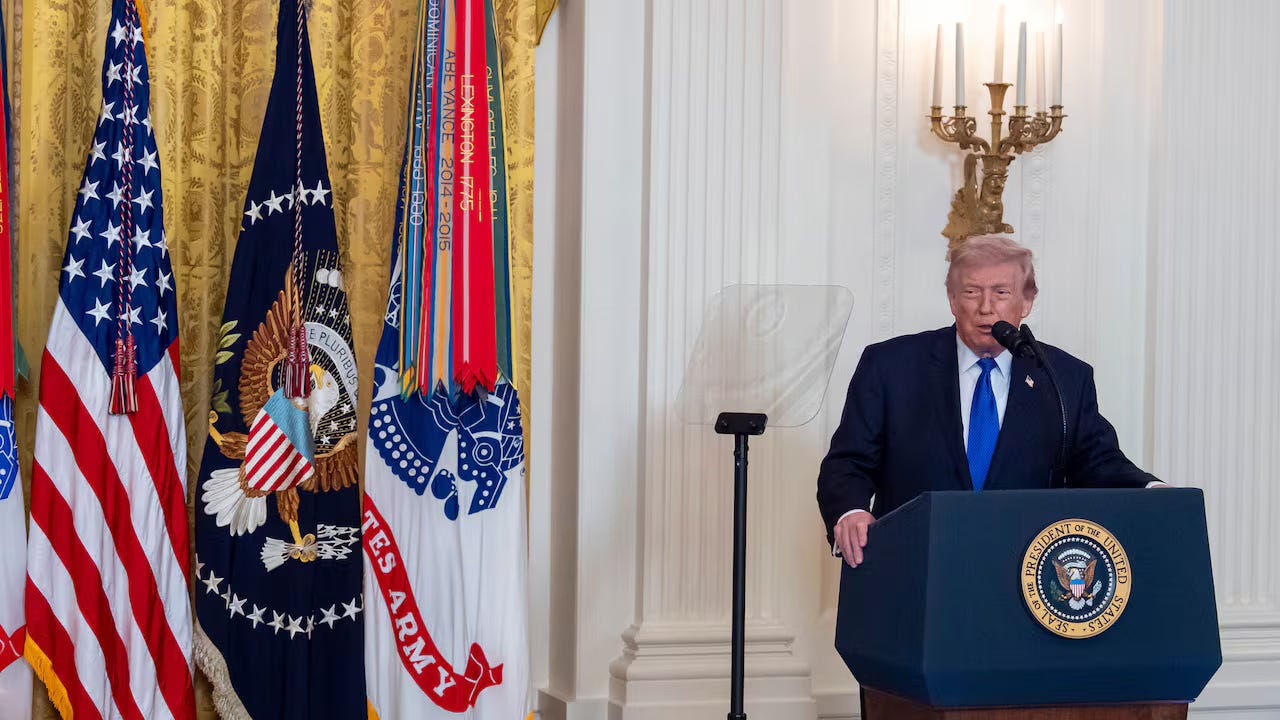
This administration’s justification for the U.S. strikes on Iran is vaporware. President Trump, Pete Hegseth, and Marco Rubio are selling it, but none of them can get their story straight. They try to appear authoritative by using terms of certitude with rigid gesticulations, but in the end, they pitch word salads that never pinpoint the imminent threat required to justify such action.
This is a deadly war of choice, timed to minimize disruption of financial markets, that further erodes trust in American foreign policy. It’s only a matter of time before our commander-in-chief connects it to his domestic agenda, Project 2025, which includes grifting votes away from eligible voters.
I lasted three years in that job before I was let go. That was a just outcome.
The midterm elections could have a similar impact on a man uniformly unfit to lead our nation, and send a message to this and future administrations that authoritarians don’t fit our system of government.
Vaporware only sells until people stop believing the pitch.
We're almost there.
Sources
On the “war of choice” framing and the disputed imminent threat
Sen. Mark Warner (D-VA), Senate Intelligence Committee, after a briefing by Rubio: “This is still a war of choice that has been acknowledged by others was dictated by Israel’s goals and timelines.” — CBS News
Carl Bildt, former Swedish Prime Minister, called the U.S. decision to strike Iran “a war of choice rather than necessity, and one which was borne out of pressure from Israel.” — CNBC
Stimson Center policy analysts: “This is a premeditated, preventive war, not a defensive action to address an imminent threat to the United States.” — Stimson Center
Rubio’s explanation of the “imminent threat” revealed Israel’s role as the driver: “We knew that if Iran was attacked — and we believed they would be attacked — that they would immediately come after us.” — Al Jazeera
Trump’s claim that Iran could “soon” reach the U.S. with missiles is contradicted by a federal Defense Intelligence Agency assessment stating Iran is years away from producing long-range missiles. — PBS NewsHour / PolitiFact
On financial market disruption
S&P 500 futures dropped 1.1%, Nasdaq 100 futures fell 1.5%, and the Dow was about 1.1% lower ahead of Monday’s opening bell. — CNBC
Oil prices on Monday traded at their highest level in over eight months, while gold and the U.S. dollar strengthened as investors sought safe havens. — CNN Business
On Project 2025 and voting rights
Project 2025 would give the federal government access to state voter rolls, enabling aggressive voter roll purges, and would weaken DOJ enforcement of the Voting Rights Act and the National Voter Registration Act. — Common Cause
The Trump administration has moved to use the DOJ’s Criminal Division to investigate and prosecute those who help others exercise their right to vote — including election officials and voter registration groups. — Brennan Center for Justice
A Project 2025 contributor outlined how the DOJ should force states to purge voter rolls, curtail absentee ballot deadlines, and dismiss lawsuits protecting eligible voters from removal. — Democracy Docket

