


Note: Actions you can take, with links, are below. And please join me in donating to candidates who will fight back against gerrymandering. CLICK HERE.
Think about the last time you voted. You did what citizens in a democracy do. You trusted that the act of casting that ballot meant something, that it would be counted, that it would matter.
Now I want you to think about what happened in Louisiana two weeks ago, and Virginia last Friday, and ask yourself whether that trust is still warranted.
Because what we witnessed in the last twelve days was a systematic attack on the act of voting itself at every stage of the process — Before, During, and After — in plain sight.
Before You Vote
Before you ever set foot in a polling place, your vote can be made nearly meaningless. That’s what gerrymandering does. Politicians draw district lines to guarantee their own reelection, packing opposition voters into a handful of districts or spreading them thin across many, until the math ensures the outcome before a single ballot is cast.
As of April 29th, the last significant legal guardrail against the most discriminatory version of this practice was effectively dismantled by the United States Supreme Court.
In Louisiana v. Callais, decided 6 to 3, the Court’s conservative majority rewrote Section 2 of the Voting Rights Act of 1965, the provision that for forty years allowed plaintiffs to challenge maps that diluted the voting power of racial minorities, even without proving deliberate intent. Under the new standard, you must prove the mapmakers meant to discriminate. In the modern era of data-driven, plausibly-deniable “partisan” mapmaking, that is close to impossible.
The ink was barely dry when three states acted on it.
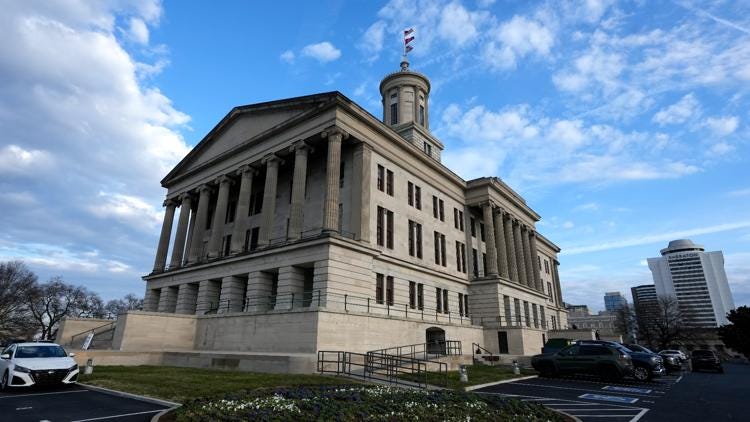
Tennessee Republicans called a special legislative session and, in four days, eliminated the state’s only majority-Black congressional district. Memphis, a city of 600,000 people, was cracked into three pieces, each stitched to rural Republican territory stretching hundreds of miles east. The bill’s sponsor said openly they did it to, quote, “maximize partisan advantage.” They were not embarrassed by this. They no longer had reason to be. Every congressional district in Tennessee now leans Trump +20% or greater.
Florida Governor Ron DeSantis signed a new map that splits Tampa across three districts, eliminates two Democratic incumbents’ seats, and dilutes the Puerto Rican vote in the Orlando area. The map was released to Fox News before members of his own legislature had seen it.
North Carolina Republicans passed a new map targeting Representative Don Davis, an African American whose district has had Black representation for more than thirty years.
Texas did this last August, gaining five Republican seats through special sessions while the DOJ provided legal cover.
In each case, before a single voter in those states shows up this November, the outcome of multiple congressional races has already been decided, drawn into the map itself. That is not democracy. That is the simulation of democracy.
While You’re Voting
Here is the sentence I still find difficult to believe is true: on May 7th, the governor of Louisiana suspended an election that was already in progress.
Governor Jeff Landry issued an executive order halting the state’s May 16th congressional primary after the Supreme Court’s Callais ruling gave him the opening to redraw Louisiana’s maps. The problem, the moral problem, is that the election had already begun. More than one hundred thousand Louisiana voters had cast early ballots. Forty-two thousand absentee ballots were in the mail.
Those votes were not counted. Those voters were not notified in advance. An election was stopped in the middle of its own execution, by executive order, because a governor decided the map needed to change.
Justice Ketanji Brown Jackson, dissenting when the Supreme Court took the extraordinary step of fast-tracking Louisiana’s compliance, said the order “spawned chaos in the State of Louisiana.” The majority did not appear troubled by this. Justice Alito called Justice Jackson’s concerns “baseless and insulting.”
One hundred thousand people voted in Louisiana. Their votes were nullified before the polls even officially opened.
After You’ve Voted
Last Friday, the Supreme Court of Virginia ruled 4 to 3 that a redistricting referendum Virginians voted on April 21st is null and void.
Three million people voted. Fifty-two percent said yes. The court threw it out.
The legal reasoning involves a procedural question about when exactly Virginia’s constitution considers an election to have begun, and whether Democrats passed the redistricting amendment during the required “intervening election” period rather than before it. Reasonable people can debate the legal merits. The three dissenters on the court, including Chief Justice Cleo Powell, believed the majority had stretched the definition of “election” beyond any prior precedent.
What is not debatable is the result: an election was held, votes were cast, a majority was recorded, and the outcome was nullified by a court whose majority was appointed under Republican governors.
Governor Abigail Spanberger called it “disappointing.” Attorney General Jay Jones said the court had “put politics over the rule of law.” Senator Mark Warner said: “Virginia’s effort was a response to that national power grab, not the cause of it.”
The Re-collapse of Reconstruction
The Democratic-drawn Virginia map was a partisan gerrymander. So was California’s Proposition 50, which voters approved in November 2025. These were maps designed to maximize Democratic advantage. Democrats drew them in explicit response to what Republicans were doing in Texas, Tennessee, North Carolina, and Florida.
It’s important to look at how Democrats fought back.
California put Prop 50 to a statewide vote. Sixty-four percent of California voters approved it. Virginia Democrats passed their amendment and brought it to a referendum. Voters ratified it, 52 to 48.
In Missouri, when Republicans cracked Kansas City’s majority-Black 5th District, a citizen coalition called People Not Politicians gathered three hundred and five thousand signatures in ninety days, nearly triple the required amount, to force the question to voters on the November ballot. In Utah, voters passed an independent redistricting commission in 2018, Republicans tried to gut it, and state courts said the legislature cannot override a citizen initiative.
Every Democratic response to this wave of Republican mapmaking ran through the will of the people.
Every Republican move went in the opposite direction. Trump called Governor Lee personally. Lee called a special session. The Tennessee legislature repealed its own fifty-six year prohibition on mid-decade redistricting and finished the job in four days. The Florida map went to Fox News before it went to legislators. Louisiana’s governor stopped an election by executive order. Alabama is asking the Supreme Court to reinstate a congressional map a federal court already found racially discriminatory.
None of these maps went to voters.
One side keeps trying to let voters decide. The other side keeps trying to decide for them.
Senator Raphael Warnock, speaking from the pulpit of Ebenezer Baptist Church, put the historical weight of this plainly: “They said we’re going to allow partisan politicians to gerrymander you, so that even when you show up, your voice won’t have as much impact because we’ll play with the lines. That isn’t a new method. That’s an old method. That’s a Jim Crow method.”
State Senator London Lamar of Memphis, speaking on the floor as her city was being carved up: “You cannot take a majority-Black city, fracture its voting power, and then tell us race has nothing to do with it. Racism does not become less racist because it’s called partisan.”
Sherrilyn Ifill, one of the foremost voting rights scholars in the country, drew the line from Callais back to the collapse of Reconstruction: eight Black members of Congress in the 1870s. Zero by 1900.
The tools change. The project doesn’t.
The House Math
Cook Political Report, one of the most reliable nonpartisan election analysts in the country, projects that Republicans will net six to seven U.S. House seats from mid-decade redistricting alone, before a single vote is cast this November.
Democrats need a net pickup of three seats to flip the House.
If Alabama, Louisiana, and South Carolina succeed in eliminating their remaining majority-minority districts, that Republican advantage could reach twelve to fourteen additional seats.
This is not a footnote. This is the mechanism by which a House majority may be determined before the election begins, through a combination of maps, court rulings, and stopped elections that most Americans have not been following closely enough.
After Virginia’s ruling last Friday, there is no fully intact Democratic redistricting countermeasure anywhere in the country except California. Missouri’s referendum is still fighting for ballot certification. Utah’s court-ordered map is the only Republican gerrymander successfully undone this cycle, and that required years of litigation under a state constitution that explicitly protected a citizen initiative.
What’s Left (to do)?
What voting rights are left after these twelve days? Formally, the right to vote still exists. What has been systematically removed is the meaningful ability of that right to produce representative outcomes, through maps that decide the results before you arrive, elections suspended while you’re participating, and referendums voided after you’ve already been counted.
And what’s left, politically, to do about it?
More than you might think. Here is where to focus:
Missouri: The People Not Politicians referendum is still alive. Whether Secretary of State Denny Hoskins certifies enough signatures to put the anti-gerrymander question to voters in November is still being litigated. Watch this. Talk about it locally. Push your media to cover it.
Florida: A lawsuit challenging the DeSantis map under Florida’s own Fair Districts Amendment was filed May 4th. This case will likely reach the Florida Supreme Court before November. Democracy Docket is tracking this AND MORE in real time.
Tennessee, Alabama, Louisiana, South Carolina: The NAACP and the NAACP Legal Defense Fund are in state and federal court. Donate directly. Register voters in the cracked districts. The communities whose representation was just erased are still there.
Congress: The John R. Lewis Voting Rights Advancement Act would restore Section 2 to its pre-Callais standard. It has been introduced and blocked repeatedly. Call your senators, including Republican senators in states where redistricting reform passed with bipartisan support. The Redistricting Reform Act, introduced by Representatives Lofgren and Padilla, would ban mid-decade redistricting nationally. It would make what Tennessee did in four days illegal everywhere. It has not received a committee hearing.
I think a lot about what I’m handing to our kids. The systems. The structures. The values. The assumption that our voice counts, that participation matters, that the rules apply to everyone.
What I watched over the last twelve days is a challenge to that assumption at every level: before the vote, during the vote, and after the vote. Votes cast and then stopped. Elections held and then voided. Rights that existed last month that do not function the same way this month.
Democracy isn’t a promise. It’s a practice. And right now, the practice is under the most serious structural threat of my adult lifetime.
This is a kitchen table conversation. I hope you’re having it.
Sources for this piece include the Virginia Mercury, Cardinal News, ABC News, NBC News, NPR, the Tennessee Lookout, the Nashville Banner, the Center for American Progress, FairVote, Democracy Docket, Bolts Magazine, and Cook Political Report. The Dad Briefs is produced independently, without party affiliation or partisan funding.
Unfortunately the South never really lost the Civil War and Reconstruction turned out to be nothing but what should have been. We never seem to learn!
This round of gerrymandering has been a big blow that will be hard to recover from.
Vote