


My essay, posted yesterday as a guest contributor to The Preamble — Sharon McMahon’s Substack publication, shared again here.
Ted Lasso begins as a fish-out-of-water story: a Midwest college football coach is hired to manage a Premier League soccer club in Richmond, England. While Ted is set up to fail (on many fronts, it turns out), he navigates unfamiliar terrain using his novel brand of leadership and his ability to see people’s struggles as the path to their strengths.
His leadership style includes a number of key values — curiosity over judgment, a short memory to push past one’s failures, radical empathy, and more — that have resonated widely. In fact, Ted’s insights have become part of the curriculum at business schools. That’s heady stuff for a sports comedy series, now in the midst of its long-awaited fourth season. (This essay contains spoilers for seasons 1-3.)
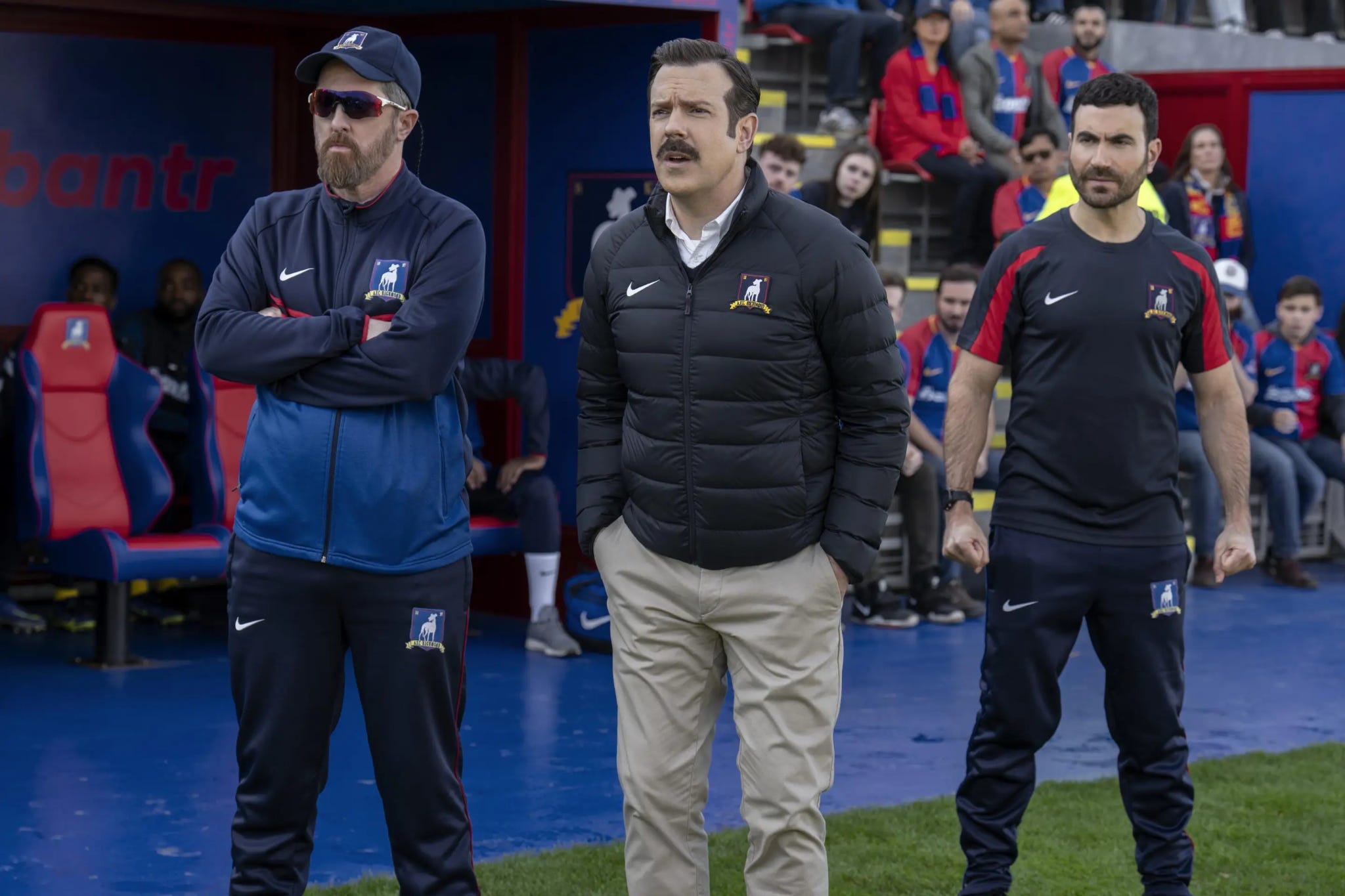
But it isn’t just executives who can learn from Ted Lasso. In the show, the soccer club’s locker room is diverse, filled with players from around the world — each with different backgrounds, skills, and temperaments —serving different roles on the team. Ted and his coaching staff guide them through successes and setbacks alike by building a culture of belief: in themselves, in the team, and in the fundamental idea that every person matters.
Democracy shares this fundamental idea, and I believe America works best when we take a page from Ted’s playbook.
Let’s look at why … one “Lasso lesson” at a time.
“Be curious, not judgmental”
The most quoted scene of the show’s first season takes place at a pub, where Rupert — the owner of a rival soccer club — bets against Ted in a game of darts. As Ted lands three impressive darts for the win, he offers Rupert some advice: “Be curious, not judgmental.” Rupert had belittled and underestimated Ted while never showing an ounce of curiosity about him (such as whether he played a lot of darts).
But with that simple, powerful phrase, Ted reminded him that being judgmental is the easy path; it spares us the work of getting to know people or investing in our own self-discovery. Curiosity opens the mind to the possible. Communities can be built with either curiosity or judgment, but only one can readily survive disagreement or welcome strangers. Only one treats everyone as equals.
“Just because we own these teams doesn’t mean they belong to us”
Rebecca, the team’s owner, hires Ted, hoping he will fail. She aims to destroy the club her ex-husband loves. Her leadership is corrupted; she bullies her staff and exploits the public trust of her team to settle a personal score. But she comes to respect Ted and to want what’s best for the team.
So when a group of billionaire team owners hatches a plot for a breakaway super league that threatens their traditional fan base, Rebecca demands they reconsider: “Just because we own these teams doesn’t mean they belong to us.”

Leadership in our democracy is, by constitutional design, limited stewardship. The president, for instance, is a tenant of the White House, not the landlord. But this idea alone isn’t a perfect safeguard from rampant abuses of power, corruption, retribution, and self-enrichment.
Elected leaders must demonstrate they know the difference between their office and themselves. A steward’s test is what they do with their temporary authority: will they leave it in better shape than they received it, or strip it for parts on the way out?
“Belief doesn’t just happen because you hang something up on a wall”
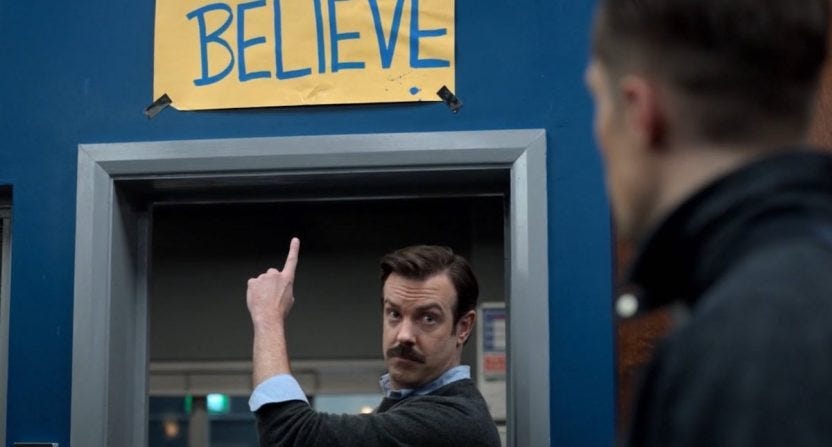
The show’s icon is a handmade sign that reads “BELIEVE” in blue letters on yellow paper. It hangs above Ted’s office door. In season 3, Ted tears the sign down in front of the team, points to his chest, and reminds them that the power of belief resides inside each of us. We exercise it every day through the work we put in together.
Symbols of our belief in America are everywhere. Flags and laminated declarations remind us of our history and the sacrifices made to preserve our way of life. But our belief only works when it’s a practice, and our Constitution restrains the powerful only to the extent that we, the people, behave as though it does.
For elected officials, that means honoring an oath. Certifying an election victory for the other party. Checking a president’s power, even when it might cost them something. For the rest of us, it means the unglamorous work of organizing and showing up to vote, helping others to register and vote, and having hard conversations with people we love.
“You only ripped it up once …”
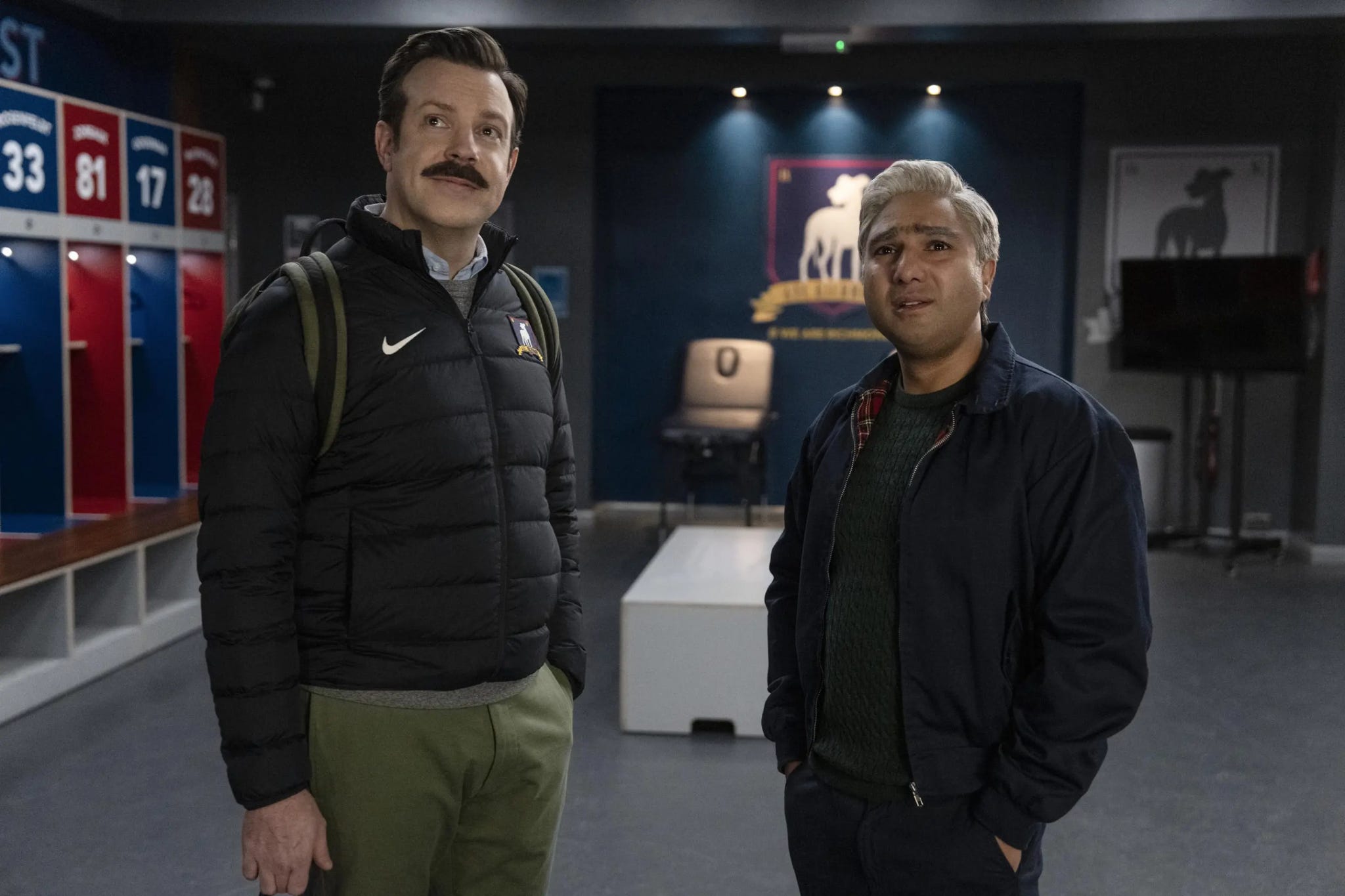
Nate Shelley begins as the kit man (equipment manager) nobody noticed. Ted raises him through the coaching ranks, where he becomes consumed with his own fame, then wounded when the attention fades. Nate’s insecurity curdles into grievance. He tears the BELIEVE sign in two, leaks information about Ted’s private mental health struggles to the press, and defects to manage the rival soccer club after being flattered by Rupert, that club’s billionaire owner.
Nate’s resentment of his circumstances at Richmond makes him vulnerable to radicalization. He is lured into a darker space and coaching philosophy, buoyed by a wealthy patron who made him feel powerful. But once he starts with the new club, everything falls apart.
The management there had created a transactional environment that undervalued relationships and trust, and overvalued winning at any cost. Nate soon leaves, and after some time away from the game, he regains his emotional footing and returns to Richmond, hoping for redemption.
There, he apologizes to Ted for everything — tearing down the sign, and revealing his private business to the world. Ted welcomes him back and accepts the apology, even admitting that he’d torn the sign down himself at least twice before.
Nate’s arc and Ted’s reaction embody both a major risk and an essential obligation of a functioning democracy.
Resentment is a renewable resource, and demagogues love to recruit the people who feel invisible, convincing them that their circumstance is a conspiracy. Rupert didn’t create Nate’s wound; he exploited it.
But that wasn’t the end of the story. Though Nate strayed from the right path, Ted kept the door open for him. A republic that offers no way home from grievance guarantees itself permanent enemies from within. We have millions of Nates in America, people flattered by a billionaire patron who is actually exploiting them because of the transactional, winners-and-losers way he views the world. What happens to them determines what happens to us.
Redemption should come at a cost — Nate had to earn his way back onto the Richmond coaching staff and steadily rebuild trust —but it must come nonetheless.
“Doing the right thing is never the wrong thing”
Sam, Richmond’s young Nigerian defender, learns that a team sponsor is owned by an oil company that has poisoned the water and the politics of his home country. He seeks advice from Ted, who tells him, “Doing the right thing is never the wrong thing.”
Sam takes Ted’s words to heart, and before a nationally televised match, he tapes over the sponsor’s logo on his jersey. It’s a risk: he is young and foreign, taking a stand against a company paying the club’s bills. But his teammates rally behind him, taping their jerseys as well in solidarity, and the club owner, Rebecca, refuses to cut Sam from the team at the sponsor’s behest.
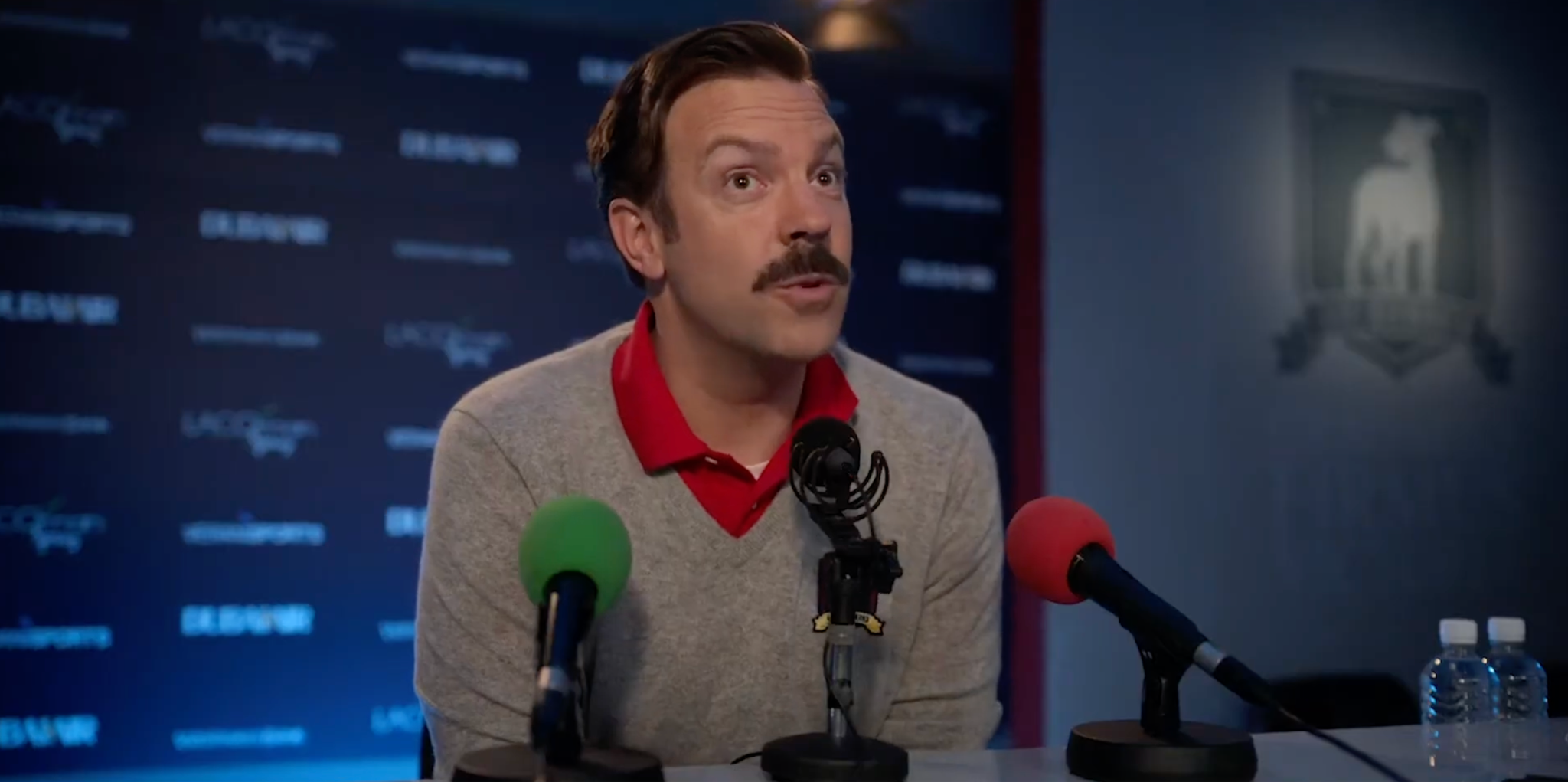
In a separate plotline, Ted gets his own test. After Nate leaks the story that Ted had a panic attack in the middle of coaching a game, Ted has every incentive to keep lying about what happened. Instead, he sits in a press conference and tells the truth about his mental health. His transparency starves the scandal before it could devour his reputation.
In self-governance, we’re often told that decency and confrontation are opposites, that our country can be kind or it can be tough. This show demonstrates otherwise. Sam’s protest is confrontational, costly, and morally correct. Rebecca’s refusal to cut him puts real money on the line. Both actions come from the same trust and belief in a culture that also produces “Biscuits with the Boss” one-on-ones and impromptu “Diamond Dogs” bull sessions.
Doing the right thing doesn’t always come with an immediate reward. It can cost a sponsorship, a friendship, a job, a primary election. But if enough people tape over a logo or talk about the hard truths, that creates a space and a culture where the next person can afford to do the right thing, too.
Courage is contagious, and so is its absence.
For America’s sake, be the one who goes first.
Slade Wentworth | The Dad Briefs covers the civic, political, and quietly human stories shaping family life in America — with recipes along the way.
Absolutely wonderful comparison and my all time favorite show because of it's inspirational messages. This is the best thing I've read since.... well the last thing you wrote. 😀
Wonderful article. Thanks Wade